


REIGN IN BEATS was a DJ showcase series conceived and produced in Bandung during the pandemic, when restrictions on public activity prevented clubs, venues, and other music spaces from operating as they normally would. Presented as a series of short individual sets and documented for online release, REIGN IN BEATS featured five Bandung DJs and selectors: GNDHI, Mr.Dymz, DJ Evil Cutz, Vladvamp, and Morgue Vanguard. Each brought a distinct approach, set of references, and musical character, making the series a compact portrait of Bandung’s DJ culture at the time—moving through hip-hop, funk, soul, electronic music, rock, and other territories shaped by each selector’s personal experience and record collection.
Rather than framing the project as a competition or confining it to a single musical direction, REIGN IN BEATS treated the DJ set as a curatorial medium: a practice of selecting, sequencing, and bringing records into conversation to construct a narrative of its own. Each episode therefore served as a personal space in which the DJs could reveal how their collections, references, techniques, and sensibilities translated into a continuous passage of sound.
Within the context of the pandemic, the format also responded to the disappearance of the communal spaces so central to DJ culture. As dance floors, gigs, and physical gatherings came to a halt, audiovisual documentation became one way for music to remain in circulation—and for the practice of selecting and playing records to retain a space in which it could be presented.
Today, REIGN IN BEATS can be revisited as a document of a particular moment: an archive of how members of Bandung’s music community sustained their practice and musical exchange while social conditions temporarily forced music culture to migrate from physical spaces to the screen.
DJ EVIL CUTZ
MR.DYMZ
GNDHI
VLADVAMP
MORGUE VANGUARD
Beat Shogun was a beatmaking competition initiated as part of Bloods’ 20th-anniversary celebrations in 2022. Rooted in hip-hop culture and the tradition of sample-based music production, the project was conceived as an arena for beatmakers to bring processes usually kept behind the scenes—chopping samples, programming drums, building loops, and shaping compositions—into a live performance and competition format.
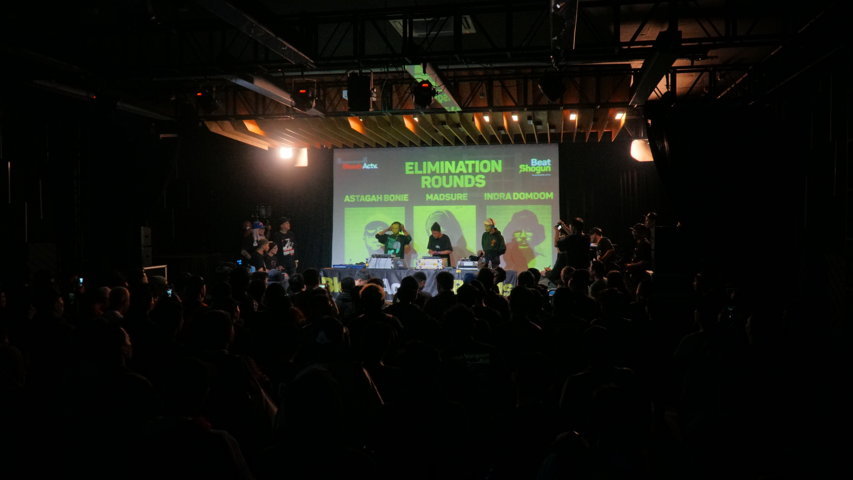
In Beat Shogun, beatmakers were positioned not simply as studio producers, but as performers. They faced one another with beat compositions created and performed using their own production setups, whether hardware- or software-based. The format drew on the sample-based character of hip-hop beatmaking: taking fragments from existing records or sound sources, then chopping, manipulating, and reassembling them into new compositions.
The competition unfolded in two stages. The open preliminary round took place online, with no formal registration process: participants submitted short videos of their beat performances through Instagram. From all submissions, the judging panel selected three beatmakers to advance to the final. Conceived as an in-person gathering in Bandung, the final brought the finalists before a live audience and the judges, alongside performances by DJs and rappers. The entire event was also designed to be documented and subsequently released through Bloods’ digital channels.
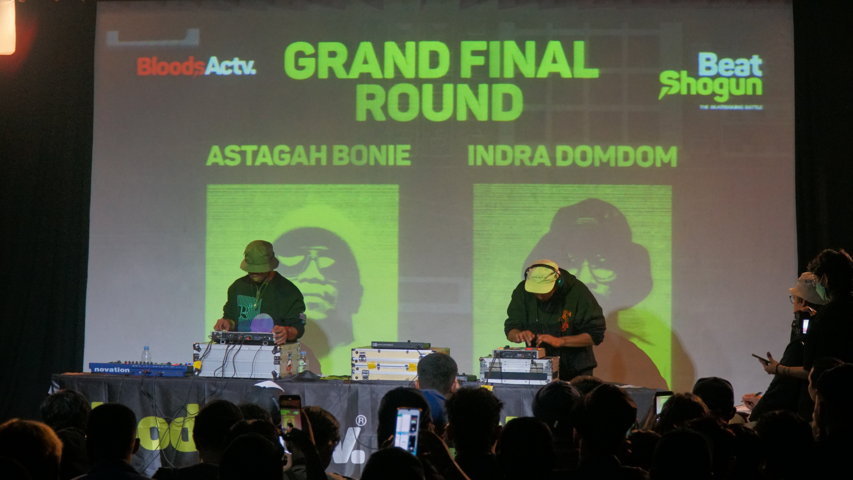
The judging panel was drawn from Indonesia’s hip-hop and beatmaking ecosystem: Ridwan Gunawan (DJ Evil Cutz), a beatmaker and DJ with a background in DMC and Red Bull DJ Battle competitions; Fajar Nurmanto (Jaydawn), a beatmaker and recording artist who has produced music for artists across genres; and Leno Rei, a beatmaker, DJ, and music media organiser.
Beyond its competitive dimension, Beat Shogun can be understood as an attempt to move beatmaking from the production room into public space. Throughout hip-hop history, beatmakers have often remained behind the MCs or the records they produced. Beat Shogun reversed that position: the beat became the primary material, while the production process itself became part of the spectacle. Samplers, pad controllers, laptops, and other production tools ceased to function solely as studio equipment and became instruments of performance.
The battle format also connected the project to one of hip-hop’s foundational traditions: competition as a mechanism for demonstrating skill, character, and individual identity. Where MC battles work through language and turntablism through the manipulation of records, Beat Shogun positioned beat production as the field of battle—testing how a producer selects sounds, constructs rhythm, reshapes samples, and establishes a musical identity within limited time and space.
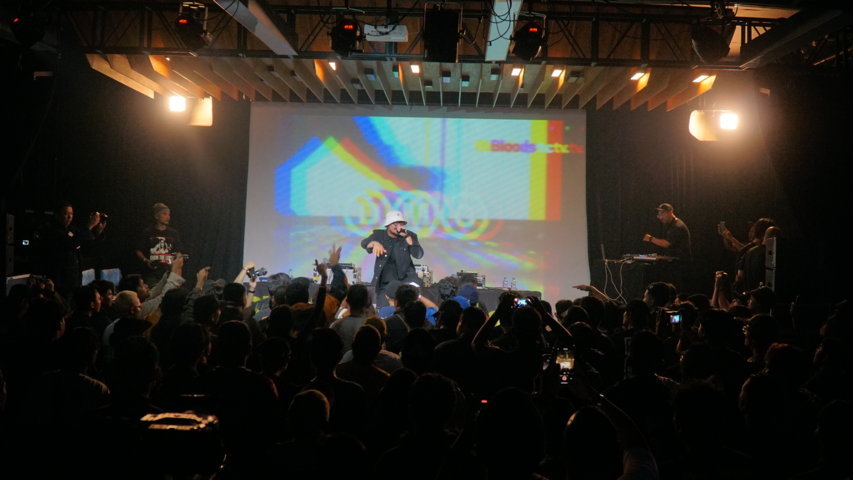
The selection of prizes reinforced this focus. Three music-production devices were awarded to the winners, with the Akai MPC Live II as the grand prize, followed by an MPC Studio 2 Pad Controller and a Novation Launchkey MK3. The prizes therefore served not only as rewards, but also returned conceptually to the practice at the heart of the event: providing tools that would allow beatmakers to continue producing and exploring music.